Educator of Mini: Teacher SVG Design Review
As a professional embroidery digitizer and product reviewer, I approach every new machine embroidery design with a critical eye toward stitchability and marketability. When evaluating the "Teacher Svg Design, Educator of Mini," my primary concern is not just how the graphic looks on a screen, but how it translates into thread on fabric. This review breaks down the practical application of this design for craft business owners, Etsy sellers, and apparel decorators who need reliable assets for their inventory.
First Impressions and Visual Personality
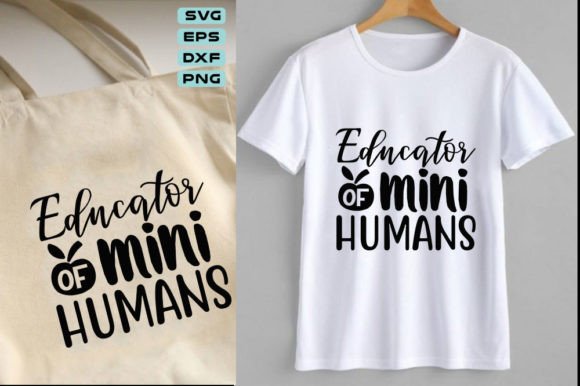
The phrase "Educator of Mini Humans" carries a specific mood that resonates deeply within the teaching community. It balances professionalism with the chaotic reality of early childhood education. Visually, this design typically leans into playful yet legible typography, often accompanied by subtle iconography like pencils, books, or apples. As a digital embroidery file, the layout suggests a centered composition that works well as a chest logo or a back-of-garment statement.
From a design perspective, the hierarchy is clear. The word "Educator" usually anchors the piece, while "Mini Humans" adds character. For an Etsy seller or boutique owner, this phrasing is gold because it targets a niche emotional connection. However, before loading this into your machine, you must assess the font weight. If the lettering is too thin, it risks getting lost in the fabric texture; if it is too thick, it may cause puckering on lighter garments. The provided EPS, SVG, PNG, and DXF files offer flexibility, but remember that vector graphics require proper digitizing parameters to become viable embroidery patterns.
Real-World Application: The Custom Sweatshirt Test
To truly evaluate this asset, I mentally placed it in a real-life production scenario: creating a custom crewneck sweatshirt for a preschool teacher appreciation gift. Sweatshirts are a staple custom apparel item, but fleece presents unique challenges due to its loft and stretch.
In this scenario, the "Educator of Mini" design serves as a perfect left-chest placement. The visual weight of the text needs to stand out against the fuzzy texture of the fleece without becoming bulletproof. If utilizing a satin stitch for the lettering, the column width must be sufficient to cover the fabric nap. Alternatively, if the design incorporates fill stitch elements, they should have enough underlay to prevent the fleece from poking through. This specific project highlights why checking stitch density is non-negotiable. A design that looks crisp on cotton might disappear on French terry unless adjusted. For this sweatshirt project, I would recommend testing the design on a scrap piece of similar fleece first to ensure the "Mini Humans" text remains legible and charming after stitching.
Versatility Across Products and Fabrics
Beyond sweatshirts, this design category has broad potential for various handmade products. Here is how it performs across different mediums:
- Tote Bag Design: Canvas tote bags are excellent for teachers. The sturdy fabric handles dense stitching well. This design works beautifully as a large center motif. Ensure you use a heavy-duty stabilizer to prevent the canvas from warping under the tension of multiple thread colors.
- Baby Embroidery: While the text refers to students, many educators also want items for their own children. On baby onesies, scale is everything. You must verify that the smallest letters in "Mini Humans" do not fall below 4mm in height, or they will turn into illegible thread nests. Always test on a stretchy knit stabilizer combination.
- Embroidered Patch: Creating patches requires a merrowed edge or tight satin border. This design’s shape lends itself well to patch creation, provided the internal details are simplified. Patches allow you to sell the design as a versatile add-on for denim jackets or backpacks.
- Holiday Embroidery: During teacher appreciation week or end-of-year gifting, this design moves fast. It pairs exceptionally well with seasonal color palettes. Swapping standard black thread for metallic gold or festive red can instantly transform the finished product into a holiday keepsake.
Navigating Technical Limitations and Fabric Risks
No design is universal, and "Educator of Mini" requires caution in specific contexts. As an experienced reviewer, I advise against using complex versions of this design on highly textured fabrics like terry cloth towels unless you use a water-soluble topping. Without it, the stitches will sink into the loops, ruining the readability of the witty slogan.
Furthermore, be wary of small hoop sizes. If you are working with a 4x4 hoop, you may need to resize the design significantly. Resizing affects stitch density; shrinking a design makes it denser and potentially stiff, while enlarging it can make satin stitches look sparse. Always recalculate your stitch count after resizing. For dark fabrics, ensure the design includes adequate underlay or a white base layer so the top thread colors pop. A yellow pencil icon on a navy sweatshirt will look muddy without that foundational white stitch.
Stretchy performance wear is another area of concern. Teachers often wear athletic gear, but knits distort easily. If applying this design to moisture-wicking fabric, use a cut-away stabilizer and a ballpoint needle to avoid damaging the fibers. The goal is a professional finish that survives frequent washing, as teacher apparel sees heavy rotation.
Commercial Value and Business Strategy
For those running a craft business or selling on Etsy, this design asset offers significant commercial value. The phrase "Educator of Mini Humans" is evergreen; it does not expire after a specific school year, making it a sustainable addition to your catalog. When listing personalized gifts featuring this design, focus on the relatability factor in your product description. Buyers trust sellers who understand the nuance of the profession.
When creating printable mockups for your digital listings, use high-resolution PNG files to showcase the design on realistic apparel templates. However, always clarify in your listing whether customers are purchasing the digital file or the physical embroidered item. If you are selling the embroidery file itself, ensure you specify which formats (EPS, SVG, DXF) are included and remind buyers that these are source files that may require digitizing software if they are not pre-digitized for their specific machine brand.
Essential Designer Notes for Success
Before launching this design into production or sale, adhere to this practical checklist:
- Verify Licensing: Confirm whether your purchase allows for commercial use of finished goods versus reselling the digital file itself. Protect your business by respecting intellectual property.
- Test Stitch Out: Never skip the test run. Use a fabric that matches your final product's weight and weave. Check for registration issues between color changes.
- Contrast Check: View the design in grayscale. If the text blends into the background in black and white, it lacks sufficient contrast for embroidery. Adjust thread selection accordingly.
- Stabilizer Selection: Match your backing to the fabric. Cut-away for knits, tear-away for wovens, and wash-away for delicate sheers. The wrong stabilizer ruins even the best digitized file.
- Detail Inspection: Zoom in on the smallest elements. If serifs or decorative flourishes are thinner than 1mm, consider simplifying them to prevent needle breaks or thread shredding.
The "Teacher Svg Design, Educator of Mini" is more than just a cute graphic; it is a functional tool for creators serving the education market. By approaching it with technical diligence and creative empathy, you can produce custom apparel and gifts that teachers will cherish. Whether you are stitching a single personalized gift or stocking a boutique, success lies in respecting the relationship between the digital art and the physical thread. Take the time to test, adjust, and refine, and this design will become a reliable performer in your embroidery repertoire.